This Railway Brake Disc Technical White Paper is optimized for B2B SEO, focusing on high-velocity rail safety, material science, and international engineering standards. It is designed to capture high-intent search traffic from railway engineers and procurement specialists.
Technical White Paper: High-Performance Railway Brake Disc Engineering
1 Product Architecture
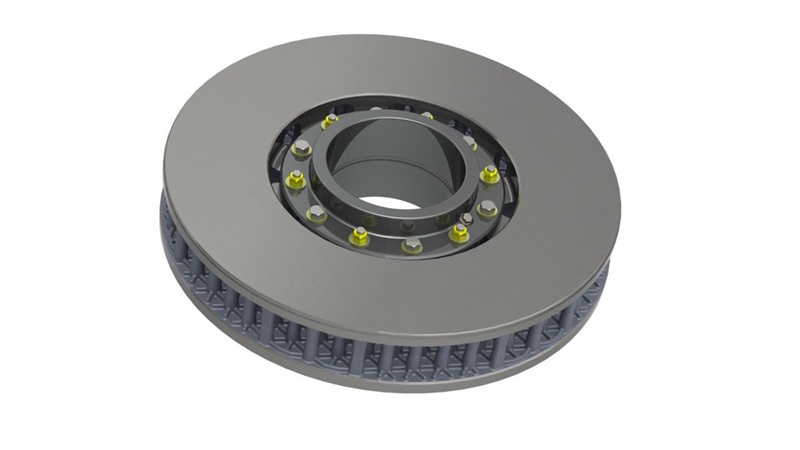
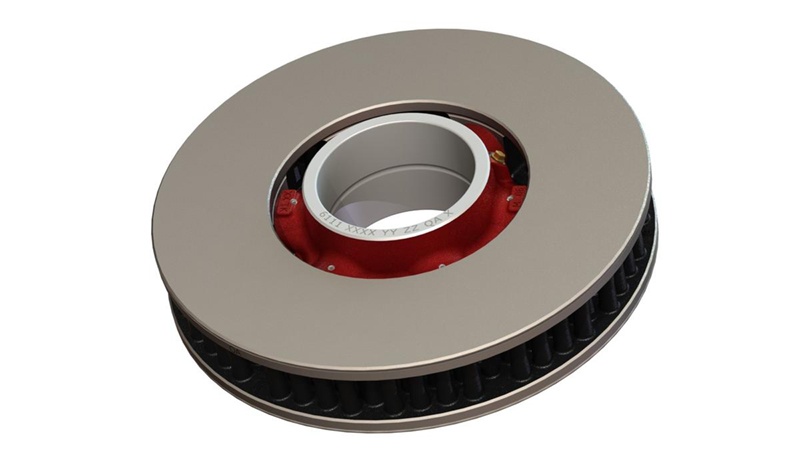
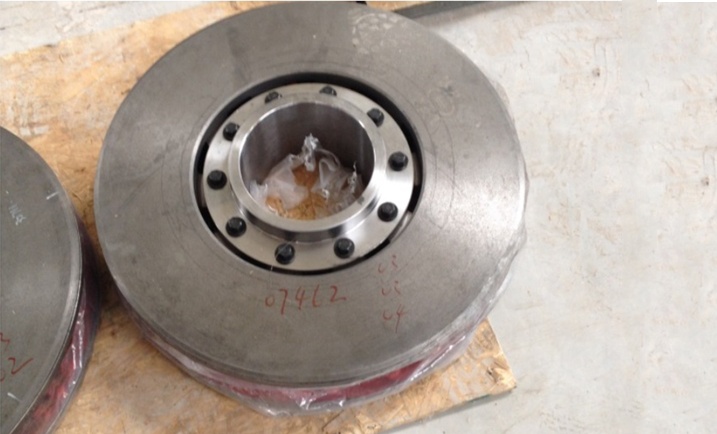
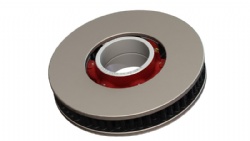
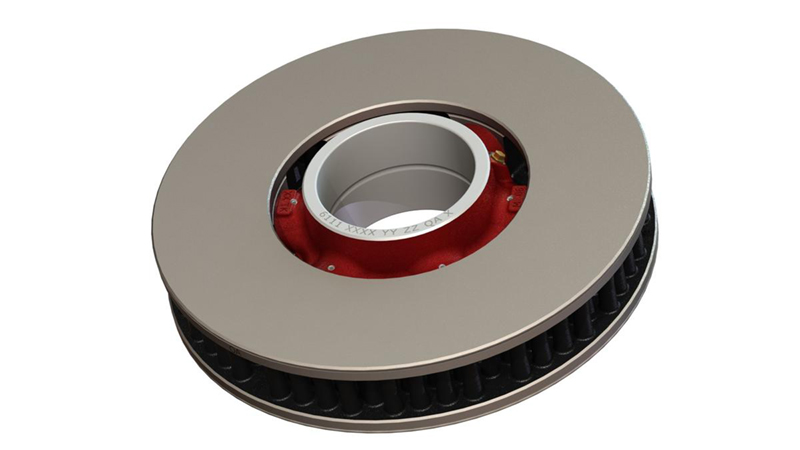
The Railway Brake Disc is the cornerstone of modern high-speed and heavy-haul braking systems. Unlike traditional tread braking, the disc brake system provides a stable friction surface that can withstand the immense kinetic energy conversion required to stop a train moving at high velocities.
We offer two primary configurations:
-
Axle-Mounted Discs: Fixed to the axle via a hub, ideal for high-speed passenger rail.
-
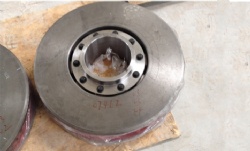
Wheel-Mounted Discs: Bolted directly to the wheel web, designed for space-constrained bogies.
2. Technical Specifications & Material Matrix
Detailed data tables help search engines index your technical capabilities for "Featured Snippets."
| Feature | Forged Steel Disc (High-Speed) | Alloy Cast Iron Disc (Standard) |
| Max Operating Speed | Up to 350 km/h | Up to 200 km/h |
| Material Grade | 18CrNiMo7-6 / Customized Alloy | EN-GJL-250 / EN-GJS-400 |
| Thermal Conductivity | High approx 45 W/m·K | Standard approx 50 W/m·K |
| Mounting Type | Axle-Mounted (Hub) | Wheel-Mounted / Axle-Mounted |
| Standard Compliance | UIC 541-3 / EN 14535 | UIC / AAR Standards |
| Ventilation Design | Radial / Pillar Fins | Radial Fins |
3. Thermal Dynamics & Ventilation
The primary challenge in railway disc engineering is managing the Thermal Power P generated during braking:
Where $v$ is the instantaneous velocity. Our discs utilize advanced Ventilation Fin Geometry to maximize airflow and heat dissipation. This design prevents:
-
Thermal Cracking: Caused by extreme temperature gradients across the disc surface.
-
Brake Fade: Maintaining a stable friction coefficient ($\mu$) even when temperatures exceed $600\text{°C}$.
-
Hot Spotting: Precision machining ensures uniform contact with the brake pads.
4. Key Engineering Advantages
4.1 Stress-Relieved Casting & Forging
Every disc undergoes a specialized heat treatment process to relieve internal residual stresses. This ensures that the disc maintains its geometric integrity (flatness and parallelism) under the most grueling thermal cycles.
4.2 Optimized Friction Pairing
Our discs are engineered to work in synergy with Sintered or Organic Brake Pads. The surface topography is optimized to facilitate the formation of a stable "transfer film," which protects the disc from excessive abrasive wear and extends its service life.
4.3 Weight-Reduction Technology
For high-speed applications, we utilize lightweight hub designs and high-strength alloys to reduce unsprung mass. This improves the dynamic behavior of the bogie and reduces track wear.
5. Manufacturing & Quality Assurance
To ensure "Zero-Failure" performance, our production line includes:
-
Dynamic Balancing: To G2.5 or higher standards to prevent high-speed vibration.
-
Ultrasonic & Magnetic Particle Inspection (MPI): To detect any subsurface metallurgical flaws.
-
Spectral Analysis: To verify the exact chemical composition of every melt.
-
Full Traceability: Every disc is laser-etched with a unique ID for lifetime tracking.
6. Applications
-
High-Speed Rail (HSR): Specialized forged discs for $250-350 \text{ km/h}$ operations.
-
Mainline Locomotives: Heavy-duty axle-mounted discs for freight and passenger hauling.
-
Metros & LRVs: Compact wheel-mounted discs for urban transit systems.


WhatsApp
Mail inquiry