Products >> AAR Railway Axle >>
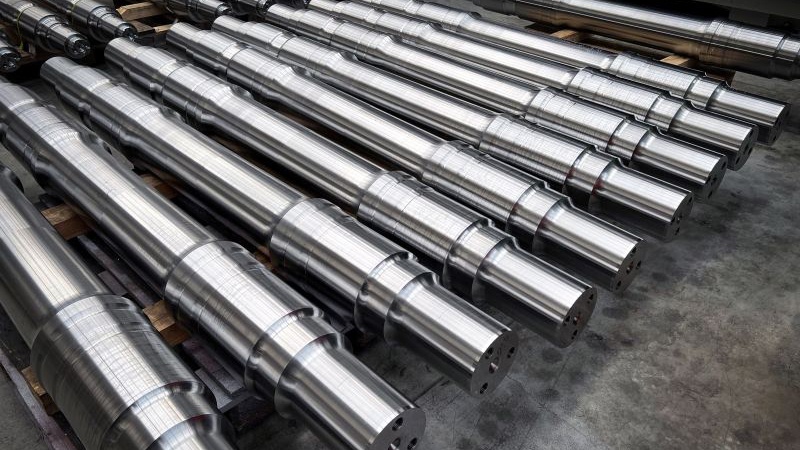
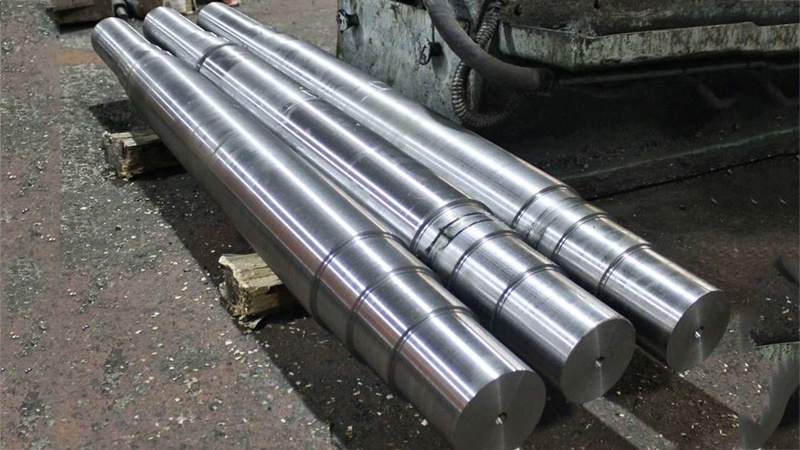
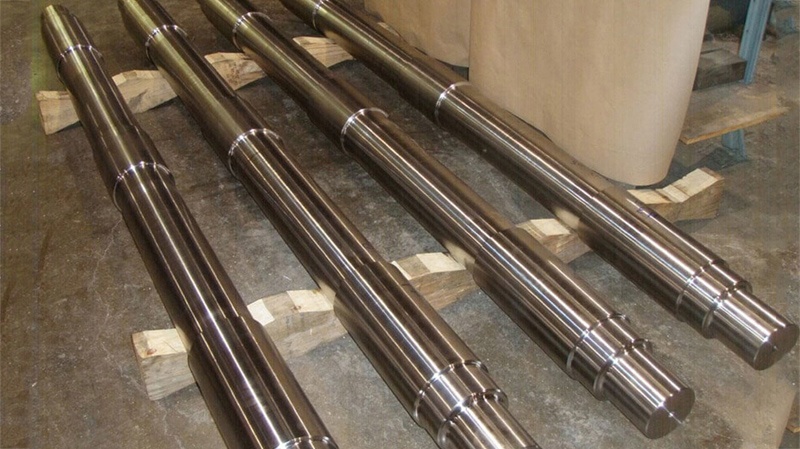
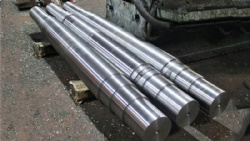
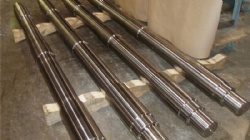
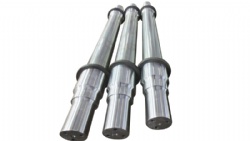
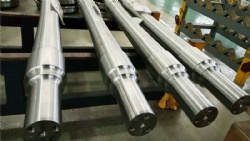
Traction Motor & Drive Axles for Electric & Diesel Locomotives
- Product No.:202382016509
- Material:high-quality carbon steel
- Standard:AAR
- Production time:60
- weight:225KGS
- Package:Wood Box
Technical White Paper: Engineering Standards and Fatigue Resistance of Locomotive Axles
1. Functional Specification
The Locomotive Axle is a high-criticality component that serves a dual purpose: it acts as the primary structural member supporting the locomotive’s massive gross weight while simultaneously functioning as a drive shaft to transmit high-output torque from the traction motors to the wheels.
Due to the extreme service environment—characterized by high torsional stress, reciprocating bending moments, and impact loads—locomotive axles require significantly higher metallurgical purity and mechanical strength than standard freight or passenger axles.
2. Technical Parameters & Material Standards
To rank for "Locomotive axle specifications," we present the standardized data for heavy-traction units:
| Parameter | Specification (Typical) | Standards Compliance |
| Material Grade | Alloy Steel (Grade G, H, or F) | AAR M-101 / UIC 811 |
| Tensile Strength | $\ge 655 \text{ MPa}$ (Grade G) | EN 13261 (EA4T) |
| Yield Strength | $\ge 345 \text{ MPa}$ | ASTM A729 |
| Surface Finish | $Ra \le 0.8 \mu\text{m}$ (Journal) | Precision Ground |
| Tolerances | $\pm 0.01\text{mm}$ (Bearing Seat) | ISO 286 |
3. Advanced Manufacturing & Metallurgy
3.1 Vacuum-Degassed Forging
Our locomotive axles are forged from vacuum-degassed alloy steel ingots. This process removes hydrogen and non-metallic inclusions, preventing internal "flaking" or micro-cracks that can lead to catastrophic fatigue failure under heavy-haul cycles.
3.2 Induction Hardening of Journals
To improve the wear resistance of the bearing journals and gear seats, we utilize Induction Hardening. This creates a hardened surface layer (typically $3-5\text{mm}$ deep) while maintaining a ductile core to absorb shock loads.
3.3 Traction Gear Integration
The "Gear Seat" is a critical interface. Our axles feature interference-fit seating areas precision-machined to accommodate high-torque traction gears, ensuring zero slippage during maximum tractive effort ($TE$).
4. Engineering for Fatigue Life
Locomotive axles are designed for an infinite fatigue life under normal operating conditions. We achieve this through:
-
Fillet Radius Optimization: Using parabolic or large-radius transitions between the wheel seat and axle body to minimize Stress Concentration Factors ($K_t$).
-
Residual Stress Management: Controlled tempering processes ensure that the axle body maintains beneficial compressive residual stresses.
5. Non-Destructive Testing (NDT) Protocol
Safety validation is conducted via a comprehensive NDT suite to ensure $100\%$ structural integrity:
-
Ultrasonic Testing (UT): Performed in both axial and radial directions to detect deep-seated metallurgical defects.
-
Magnetic Particle Inspection (MPI): Focused on the fillet areas and journals to identify any surface-breaking fatigue cracks.
-
Dynamic Balancing: Ensuring the axle maintains rotational stability at maximum operating speeds, reducing bogie vibration.
6. Application Compatibility
Our locomotive axles are engineered for compatibility with major global platforms:
-
Heavy-Haul Freight: Class I railroad locomotives (SD70ACe, ES44AC, etc.).
-
Shunting/Switcher Locomotives: High-durability axles for frequent start-stop cycles.
-
Passenger Traction: High-speed axles for electric multiple units (EMU) and power cars.
Products Category
Contact Us
Name: Meiya
Tel: +86 13862216492
E-mail: meiya@guarail.com
WeChat: +86 13862216492
Whatsapp: +86 13862216492
Add: B1608 room Building 5 of Tainhe Huayuan ,YangJian Twon,Suzhou city ,Jiangsu ,China


WhatsApp
Mail inquiry